- Swimhome
- Selection Guide
- 0 comments

Diagnosis: What type of light does your pool need?
Before looking at lumens or colors, crouch down at the pool edge and look at your current light or the pre-installation. The pool rules, and depending on how it was built, you have two very different paths: You have finally decided to build or renovate your pool. You want it to be the center of your garden all summer, a place to enjoy with family and friends, to relax and cool off. Now is the time to choose the lighting system that will illuminate and color your pool during relaxing nights, gaining in safety and aesthetics. Choosing a quality system is key for your purchase to be durable, lasting, and enjoyable. In this brief guide, we will try to help you through the purchasing process by answering the most common questions our clients have.
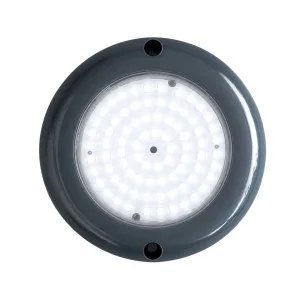
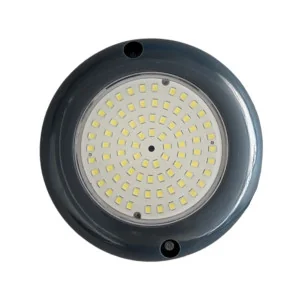
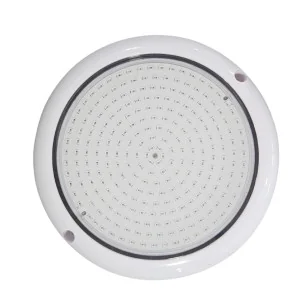
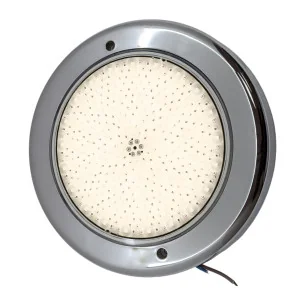
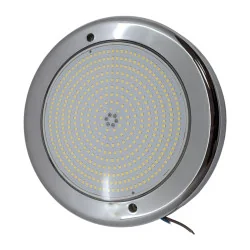
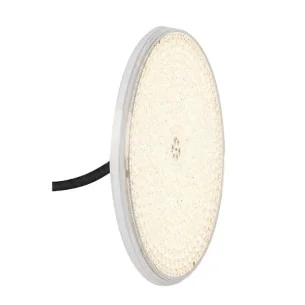
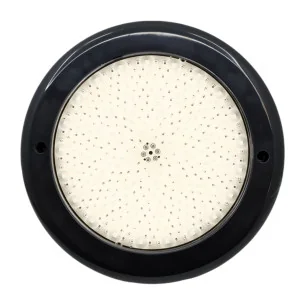
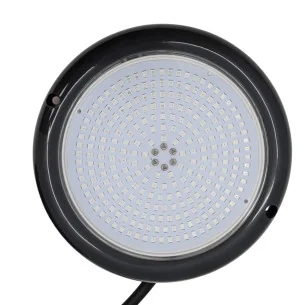
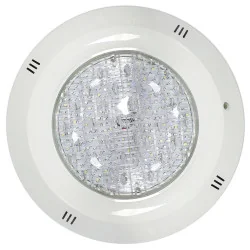
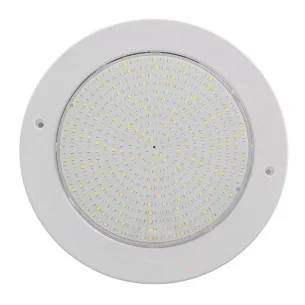
The Surface System (Flat)
Very common in modern pools, fiberglass/polyester and concrete, or when drilling a large hole in the wall was avoided.
- How to identify it: The light protrudes from the wall about 3-5 cm. There is no hole behind it, just a cable coming out of the wall into the light, which is screwed directly to the wall via a plastic piece (the crosshead/bracket).
- The common problem: When changing these lights, often the holes of the new light don't match the old wall drills. Result? You have to drain the pool to use the drill.
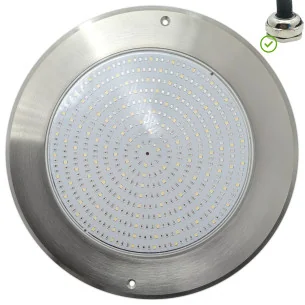
- The Swimhome Solution: We have several models with a standard crosshead or adapter bracket. Our surface lights are designed to fit most existing anchors. You remove the old one, put in the new one, and use the same holes. Without draining the water.
The Niche System (Standard PAR56)
This is the most common in concrete/tiled pools built more than 10 years ago.
- How to identify it: You will see the light is "recessed" into the wall. If you removed the trim, you would see a plastic "bucket" embedded in the concrete.
- The big advantage: Formerly, they offered more power than flat models.
- Our recommendation: Although you can opt to change just the bulb, our recommendation is to opt for our new Renove model. This model renews the front and LED of the light, avoiding flooding problems typical of PAR56s and offering greater durability.
Internal Technology: Air or Resin? (Vital for durability)
Here lies the secret to greater durability and design flexibility. Traditional lights are watertight housings filled with air, whereas resin-filled lights have no air, allowing for more compact and durable designs.
- Old Technology (With Air): Traditional lights (and many current LEDs) are empty shells with a bulb inside, closed with a rubber gasket (O-ring).
- The risk: Over time, temperature changes (cold water vs. lamp heat) dry out the rubber. Eventually, a drop of water gets in, condensation forms, and the electronics burn out.
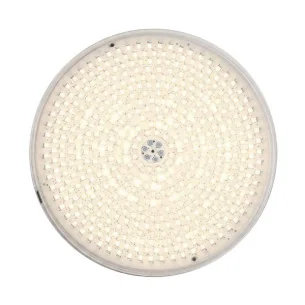
- Airless Technology (Resin-Filled): All our premium lights use full-filling technology.
- The advantage: We inject transparent epoxy resin into the light until not a millimeter of air remains. It is physically impossible for water to enter because there is no space for it. The light becomes a solid block, much more resistant to knocks and with better heat dissipation.
Light Color: Not just aesthetics, it's functionality
Choosing between White or RGB depends on the real use you give the pool:
- Cool White (6000K): This is "crystalline" light. If you have blue or white tiles, this light will make the water shine with a spectacular turquoise blue tone. It is the option that gives the greatest feeling of cleanliness and illuminates the most (more lumens) for the same consumption. Ideal for night swimming.
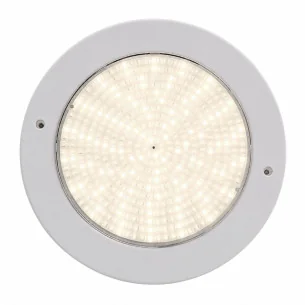
- Warm White (3000K): Yellowish/golden tone. Recommended almost exclusively for rustic style pools, sand color, or natural stone. On blue tiles, it can give a "greenish" look to the water that is usually not liked.
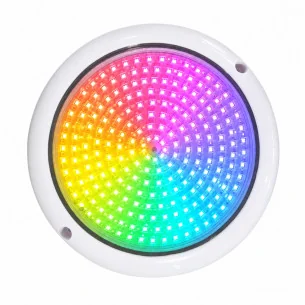
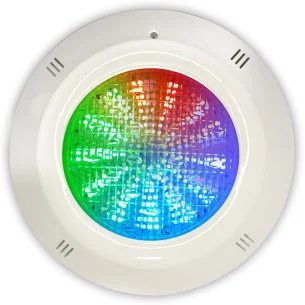
- RGB (Multicolor): Allows changing color according to the event. Red for a party, soft blue for relaxing... But watch out: they need control.
- RGBW (Multicolor + White): The total solution, offering all the advantages of RGB lights and white models in a single light.
Technical notice: To install RGB you need to ensure your control system (remote or switch) is synchronized. If you install 3 RGB lights, you'll want all 3 to change color at the same time. Our systems include "color memory" so they always turn on how you left them.
Voltage and Safety: 12V AC or DC?
This is the most technical point and where most installation errors are made.
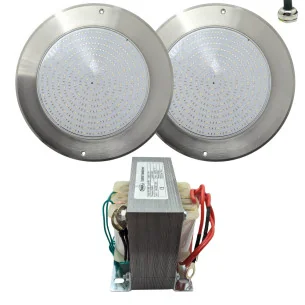
By European safety standards, underwater lighting always runs at 12 Volts. Never direct 220V. This means you need a transformer.
- If you already had halogen lights: Your old transformer is likely 12V AC (Alternating Current).
- Good news: Most of our LED PAR56 lamps are compatible with 12V AC, so you can use your old transformer (as long as it works well).
- If installing new or LED strips: You may need a 12V DC (Direct Current) power supply, especially for some RGB models with 4 or 5-wire cables.
- Golden rule: Check the label on your current transformer before buying. If in doubt, send us a photo of the transformer label and we will tell you which bulb is compatible.
Quick summary to avoid mistakes
Install white or colored LED lights?
- Check if you have a hole (Niche) or flat light (Surface).
- If you want durability, always choose Resin-Filled.
- If you want lots of light to see the bottom: Cool White.
- If you want aesthetics and fun: RGBW.
- Make sure your transformer outputs 12V.
Still have doubts? Send us a photo
Don't risk buying the wrong light. Take a photo of your current light and send it to us via WhatsApp. We will tell you exactly which replacement is compatible.
Send Photo via WhatsApp
Comments (0)